
2027 Tax Updates: What Texas Business Owners Should Review
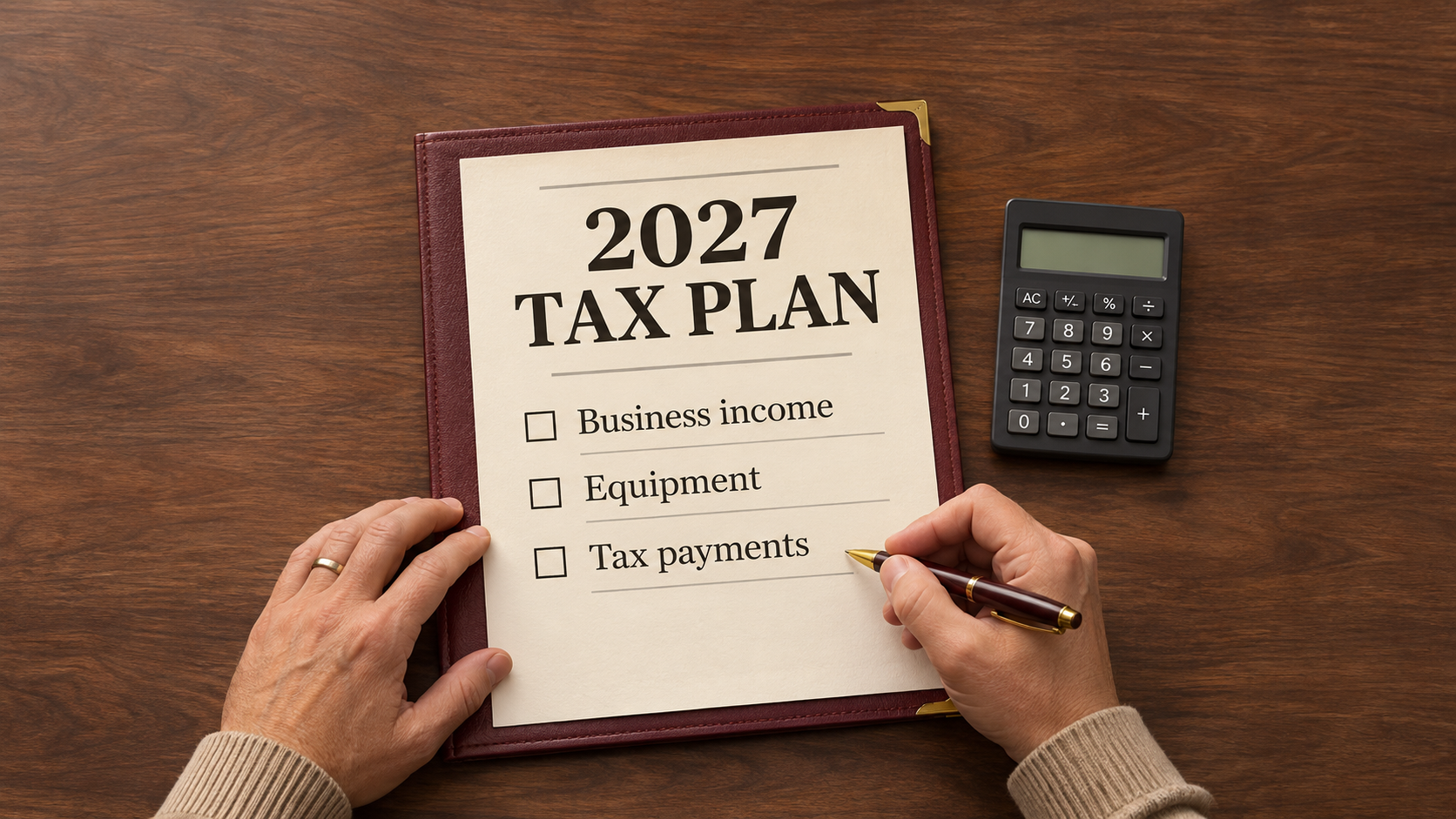
If you’re thinking about adding another truck, replacing equipment, or taking on more work next year, the tax side belongs in that conversation.
The IRS has released its 2027 inflation adjustments, including changes that can affect your business deductions, contractor reporting, and personal tax return.
For business owners here in McAllen and across the Rio Grande Valley, the useful question is how those changes fit your expected profit and plans for the business.
These are tax-year 2027 figures, generally used on returns filed in 2028. Your 2026 return, filed in 2027, still uses the 2026 rules and amounts.
Revisit Your QBI Deduction
If you operate as a sole proprietor, partner, or S corporation shareholder, you may qualify for a deduction of up to 20% of your qualified business income.
For 2027, the income thresholds where certain additional QBI limitations begin phasing in increase:
Filing status2026 threshold2027 thresholdMarried filing jointly$403,500$416,600Single$201,750$208,300
These thresholds use taxable income before the QBI deduction. For a joint return, the rest of your household’s taxable income matters too.
For example, a couple with $410,000 of taxable income before the QBI deduction would be above the 2026 threshold but below the 2027 threshold. That can change how the wage, property, and certain service-business limitations affect their deduction.
Other eligibility and calculation rules still apply. If your income is near a threshold, this is a good reason to update your projection before deciding on owner compensation, retirement contributions, or a major purchase.
Review Equipment Purchases Before You Commit
The maximum Section 179 deduction rises from $2,560,000 in 2026 to $2,640,000 in 2027. The limit begins shrinking when qualifying property placed in service during 2027 exceeds $4,230,000.
For heavy SUVs covered by the special Section 179 rule, the cap increases from $32,000 to $33,100. That is a limit on the Section 179 deduction for those vehicles; other depreciation rules may also apply.
If you’re buying a work truck, construction equipment, or a restaurant’s new kitchen equipment, we need to look at the actual purchase:
- Does the asset qualify?
- How much will it be used for business?
- When will it be ready and available for use?
- How do the income limits and available depreciation options affect the deduction?
A purchase order or down payment alone does not establish that equipment has been placed in service.
The financing matters too. A deduction can reduce taxable income, but the payments still have to fit alongside payroll, materials, and your other bills.
Update Your Contractor Reporting Process
If you pay subcontractors or other independent service providers, this change belongs in your bookkeeping process.
For otherwise reportable contractor payments, the general Form 1099-NEC threshold rises from $2,000 per payee for 2026 to $2,100 for 2027.
That is the annual total paid to the person or business. Several smaller payments can add up to the threshold.
Keep collecting W-9s and recording payments throughout the year. The payee’s tax classification, payment method, and any backup withholding can affect the reporting requirements.
Also, the $2,100 threshold applies to payments made in 2027. The 1099s you prepare in early 2027 for 2026 payments use the 2026 threshold.
Update What You Set Aside for Taxes
Your personal return is part of the business planning conversation, especially when your business income passes through to you.
The standard deduction increases for 2027:
Filing status20262027Married filing jointly$32,200$33,200Single or married filing separately$16,100$16,600Head of household$24,150$24,925
The federal marginal tax rates remain the same, while the income brackets move upward.
Those adjustments can help, but a more profitable year can still mean a larger tax bill. A higher standard deduction also reduces taxable income; it does not reduce tax dollar for dollar.
Before changing your quarterly payments, we should review expected business profit, other household income, deductions, credits, and taxes already being paid through withholding.
Prior-year payment rules may help you avoid an underpayment penalty, but the amount needed to avoid a penalty can differ from the amount you will ultimately owe. Your cash-flow plan should account for both.
Let’s Put the 2027 Numbers to Work
Start with current books and a realistic idea of what next year could look like. Bring the equipment quote you’re considering, the income changes you expect, and the questions you have about what to set aside.
At ProBooks Financial, we help business owners connect their bookkeeping, tax planning, and financial decisions throughout the year.
Call Gaddi at ProBooks Financial at (956) 520-2773 to review what the 2027 changes mean for your business. Let’s look at the numbers before you make the next decision.
Ready to get your finances on track?
Stop stressing over taxes and messy books. Schedule your free consultation and get clear on your numbers.
Schedule a Free Consultation